
Looking for a Samsonite Alternative? Why Rockland Melbourne Is Worth a Look
Samsonite has dominated the luggage market for decades, but its premium pricing puts many travelers in a tough spot. A carry-on can easily run $200 or more, and a full set often climbs past $600. That’s where Samsonite alternative luggage comes in—brands that deliver similar construction and features without the luxury-tier markup.
Rockland Melbourne is one option we keep hearing about from budget-conscious travelers. It uses the same ABS hardside shell found in many high-end lines, pairs it with smooth-rolling spinner wheels, and sells for roughly half what you’d pay for a comparable Samsonite set. We’ll walk through what actually separates the two and where Melbourne holds its own.

Shell Material: ABS Hardside in Both, Different Price Points
Both Samsonite’s mid-range hardside models and Rockland Melbourne rely on ABS thermoplastic, the same injection-molded resin used across the luggage industry. ABS resists cracks better than polycarbonate blends in cold cargo holds, and it flexes slightly on impact rather than shattering.
The main difference is finishing. Samsonite often adds textured patterns, metallic paint, or multi-layer lamination that drives up tooling costs. Melbourne sticks to a smooth matte finish and simple color palettes—no embossed logos or metal corner guards—which keeps manufacturing lean. In everyday use, both shells protect your clothes from rain and rough handling equally well.
Spinner Wheels and Expandable Gussets: Where the Specs Align
Melbourne’s four double-spinner wheels use the same inline-skate bearing design as most Samsonite hardside models. Each wheel pivots 360 degrees, so you can roll the case beside you in a crowded airport aisle instead of dragging it behind.
The Rockland Melbourne hardside collection also includes a zipper-expansion gusset that adds two inches of depth when you unzip the perimeter seam. That feature used to be Samsonite’s signature, but it’s now standard across the category. If you’ve never owned an expandable case, our guide to how the expandable spinner gusset mechanism actually works shows exactly how the fabric panel folds and locks.
Interior Organization: Simpler Layout, Same Compression Straps
Open a Samsonite hardside and you’ll usually find zippered mesh dividers, cross straps, and sometimes a removable wet-pocket. Melbourne keeps it leaner: one zippered mesh panel on the lid side, cross-compression straps on the bottom, and a single elastic pocket for toiletries.
That stripped-down layout saves weight—Melbourne’s 20-inch carry-on typically weighs 6.2 pounds empty versus Samsonite’s 7-pound average—but you lose the extra organizational pockets. If you pack with cubes or just fold everything into stacks, the simpler interior works fine. If you rely on built-in compartments to separate shoes from shirts, you’ll notice the difference.

Zippers and Latches: Where Budget Cuts Sometimes Show
Samsonite uses YKK or proprietary locking zippers on most hardside models, and those zippers are tested to 5,000 open-close cycles before release. Melbourne uses unbranded coil zippers that meet the same SATRA TM31 pull-test standard but aren’t batch-tracked the same way.
In practice, that means Melbourne zippers occasionally snag or refuse to close when the case is overpacked. The fix is usually simple—reseat the slider and pull slowly—but if a zipper does fail mid-trip, you won’t find a Melbourne service counter in most airports. Our troubleshooting guide for stuck Rockland hardside zippers covers the three common causes and the field repairs that work when you’re already at the gate.
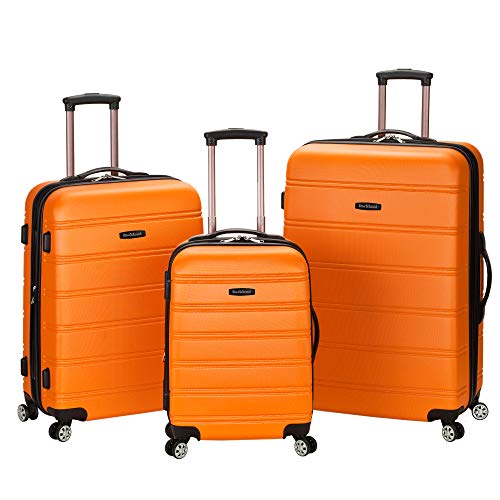
Set Pricing: Three Pieces for One Samsonite Carry-On
This is where the value proposition gets stark. A Rockland Melbourne three-piece ABS set—20-inch carry-on, 24-inch mid-size, 28-inch checked—typically retails under $150. A single Samsonite Winfield 2 carry-on costs $180 to $220 depending on the color.
For families outfitting two or three travelers at once, or anyone replacing an entire broken set, that pricing gap makes Melbourne hard to ignore. You’re trading brand recognition and a longer warranty period for immediate affordability. If your travel pattern involves one or two trips a year and you pack conservatively, Melbourne delivers years of service at a fraction of the upfront cost.
When the Melbourne Trade-Off Makes Sense
Rockland Melbourne won’t replace Samsonite for travelers who need global warranty support or fly every week. But for families, students, and leisure travelers who make a handful of trips per year, it delivers the core hardside features—ABS shell, spinner wheels, expandable capacity—at a price that lets you buy a full set for less than one premium carry-on.
The zippers require a gentler hand and the warranty window is shorter, but the shell material and rolling performance match what you’d get in Samsonite’s mid-tier lines. If upfront cost matters more than brand recognition, Melbourne is worth the look.
Common Questions About Switching from Samsonite to Budget Hardside Luggage
Melbourne uses the same ABS shell material as mid-range Samsonite hardside models, so it handles normal baggage handling and overhead bin storage without cracking. The main durability difference is in the zippers and wheel bearings—Samsonite tests components to higher cycle counts, which matters if you fly weekly.
For leisure travelers taking a few trips per year, Melbourne holds up fine. If you’re a road warrior checking bags fifty times annually, the warranty coverage and component lifespan of a Samsonite model justify the higher price.
The Melbourne 20-inch spinner measures roughly 20 x 13.5 x 9 inches including wheels and handles, which fits most domestic US carriers’ carry-on gauge. When you expand the gusset, depth increases to around 11 inches, which can push it over the limit on smaller regional jets.
Always measure with the expansion zipper closed if you plan to carry on. For checked bags, the 24-inch and 28-inch models fall well within standard limits.
Rockland sells replacement wheels and zipper sliders through their site, and the parts fit Melbourne models made in the past five years. Handles and shell panels are harder to source because ABS luggage isn’t modular—the shell is molded as one piece.
If a wheel axle snaps or a zipper pull breaks off, replacement parts are available and install with basic tools. If the shell cracks or a handle mounting point fails, replacement is usually cheaper than repair.
Rockland Melbourne carries a limited one-year warranty against manufacturing defects. Samsonite’s hardside lines typically include a five- to ten-year warranty depending on the collection, and their repair network operates in most major airports.
The shorter warranty reflects Melbourne’s lower price point. If a defect appears in the first year, Rockland replaces the case. Beyond that, you’re on your own for repairs.
Melbourne’s simpler interior layout and unbranded hardware keep the empty weight lower. A 20-inch Melbourne carry-on weighs around 6.2 pounds versus 7 to 7.5 pounds for a comparable Samsonite Winfield or Omni.
That pound-and-a-half difference matters if you’re flying budget carriers with strict weight limits. It’s less relevant for domestic travel where carry-on weight rarely gets checked.
ABS hardside luggage protects contents equally well regardless of brand, so Melbourne handles international cargo holds and rough tarmacs just fine. The risk is replacement availability—if a wheel breaks in Bangkok or a zipper fails in Paris, you won’t find a Rockland service counter.
Samsonite’s global repair network is the real premium you pay for. If you travel internationally often and can’t afford a mid-trip luggage failure, that network justifies the cost. For occasional international trips, Melbourne’s lower price buys you a backup set.